
Ep37 - Rethink: What Did We Learn in 2022?
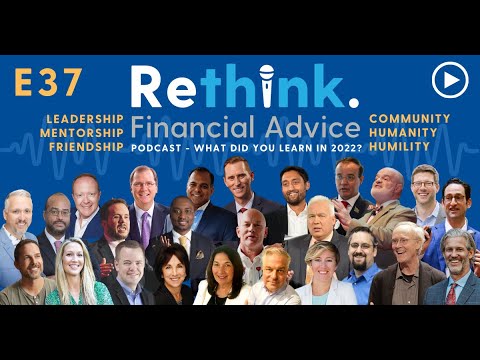
Watch and Listen
Episode Summary
In this hosts-only, year-in-review episode, H. Adam Holt and Derek Notman revisit the standout lessons and "mic drop" moments from a full year of Rethink conversations. Rather than rushing straight into 2023 planning, they pause to honor what the year's guests taught them and their listeners. The episode is a distilled recap meant to help advisors carry 2022's best insights forward.
What This Episode Covers
- Top lessons and "mic drop" moments from 2022's guests
- Recurring themes that surfaced across the year's episodes
- The value of reflecting before planning ahead
- Listener stories about the podcast's real-world impact
- A preview of what's ahead for Rethink in the new year
Full Transcript
Full timestamped transcript.
[00:00:28] H. Adam Holt: Derek, how do we make sure we don't waste all that we learned in 2022?
[00:00:35] Derek N. H. Notman: Man, Adam, that's, that's a good question. I, I don't know where the heck 2022 went. Talk about a blur. Really.
Maybe I, maybe I'm just catching up to my gray hair and I'm getting old and time flies by faster. I don't know, but I think you really do bring up a good question cuz we are bombarded with so much information over the course of a year. And I would argue most of us wanna take that stuff and want to get better.
I wanna make my business better, my life better. Like how do I do that? And I mean, I don't know if we have the magic pill, but I think we've got, you know what I want to call like the rethink. Hmm. . I, so I would say we've got like 24 little nuggets of gold,
[00:01:18] H. Adam Holt: 24 mic drops, as we call it. Mic drops.
[00:01:22] Derek N. H. Notman: Yeah, I agree with you.
Yeah, that's a really good question. Cause I think we're all thinking this or rethinking what we did over the last year. I'm like, man, where'd it go? What am I supposed to do? How's this next year gonna be?
[00:01:34] H. Adam Holt: I know for myself, I tend to look very forward and say, okay, what are we gonna do next? What are we gonna do next?
And looking backwards, I always felt was not even something really worthy because I can't change it. But the change of thinking or the rethinking of it, as you said, Derek, Is, can we at least honor what we did learn? Can we take those moments and turn them into something we can be choiceful about? Can we take action about it or can we decide, no, that's not for me, and remind ourselves all the good stuff that we have done this year.
[00:02:09] Derek N. H. Notman: I think that's a great way to put it, like recap it, take, you know, a little bit of time, maybe just the length of this episode for all of you listening just to say, I don't like that one, but this one's a really good one. I'm adding that to my list for 2023. This is what I gotta do.
[00:02:26] H. Adam Holt: Well, you know, you and I have taken hundreds of hours to put this podcast together.
Oh my gosh. We're committed to not making it a commercial, , around trying to sell some product or services or so forth. Just all straight mentorship. What can we learn from our experiences as well as that of others, and turn that into a mentorship podcast. I would say, looking back, I think we've achieved that.
Derek, I'd say congratulations to you cuz we've achieved that so far. So thank you for that.
[00:02:54] Derek N. H. Notman: A hundred percent. It's been a ton of fun. And I think when you lead, well we talk about leading with advice and that is one of the nuggets by the way, we'll get to that. But we're, we're, when you lead with mentorship, like it's just good things happen.
, I, I just got contacted by an advisor yesterday in. They're actually a South African in Canada. he, , he even said, listening to Adam and Derek, it was a game changer. And, and he was, he was just showering with these compliments about how he just loves what we have to say.
And you, and I mean, we can let our egos get outta check all day long, man. Like, I know. We're the best. We're awesome. Right?
[00:03:29] H. Adam Holt: Well, you are. I'm, I'm second best. That's okay. second best.
[00:03:32] Derek N. H. Notman: But at the end of the day, that only goes so far. And I think when we hear from those that we've never even met how we're having a positive impact.
That just stokes the flames for me. That really does.
[00:03:44] H. Adam Holt: That's true. Amen. That's great stuff. Well, you know, we thought about what we wanted to do for our last podcast of the, of this 2022 season. , we did 24 episodes this year, Derek. I was pretty impressed that we pulled it off while both running our companies and all the other fun stuff and trying to keep life balance and moving and doing everything we've done.
Probably not too dissimilar from the people who are listening to this right now. It's a lot. We created a lot of milestones and we said it would be a waste if we didn't take the time to review. Just spend a moment, a minute on each one of those and perhaps what we learned or what we took away, because it's really a great reminder for all of us listening to actually perhaps go back and revisit some of these episodes.
We wanted to do that for you is really go back to our library and say, what did we actually learn from 2022?
[00:04:30] Derek N. H. Notman: We learned a lot. started all the way back was the January 5th, I think was the episode 13 that we published. Mm-hmm. . So you just want to get into this right now? Let's do me,
[00:04:40] H. Adam Holt: yeah, let's go through it.
Let's just go through it.
[00:04:42] Derek N. H. Notman: Boom. Okay. We're gonna go this fast paced here, folks. So, 13 back last, almost a year ago now. It was all about attracting ideal clients as a thought leadership. Thought leadership was like the name of the game and it , comes down to your marketing, how you are in social and authenticity.
And I, I took that one to heart and had a great year because of it. And it opened up new doors. Mm-hmm. , just by being what's called a thought
leader.
[00:05:06] H. Adam Holt: Yeah. This debate I think was really interesting because it set the tone for the whole year. Everybody, I think, who came to us in the first six months was thinking, how can Derrick and Adams conversations help us address marketing?
Which has really been a challenge for most advisors. Many of us who focus on, uh, we'll call it asset retention businesses, really kind of s. Ignored marketing for a long time. So I'd definitely recommend anybody go back and listen to this one. This is the first time we also had the word authenticity pop up in our social media marketing conversations and thought leadership.
So definitely a good one.
It was interesting because what followed that one in episode number 14 was with Ramsey Smith. Now, I'd seen Ramsey speak a bunch of times. I had been on several of his podcasts. He talked about advisor bias, in distribution planning, uh, and distribution planning in this context was how do you deal with retirement distribution planning?
How do you take income from a retirement plan? And I thought it was interesting because what he brought up was something I hadn't really heard before, which is promoting the ideas that we should be buying our retirement plans with the distribution in mind. And just like we had bought pensions years ago, I thought it was interesting that , he brought up this idea of reversion to the private pension where annuities sold inside of qualified.
[00:06:18] Derek N. H. Notman: Yeah, it, it is a really nice spin on it, a refreshing spin on it. And more tactical as well. So any of you advisors out there that are in that retirement area where you're really helping a lot of folks plan for and transition into retirement, definitely have , a listen on this one for sure.
So then the next one, which was kind of a fun transition, is over to, well known George Kinder. Yeah, and that was a really fun conversation. I think he was in Hawaii when he was chatting with us, which is awesome. . But his whole thing about going beyond being a fiduciary and how he's been doing it forever, which is really cool.
, he even made the point , being a fiduciary is better for the planet. That's right.
You gotta go listen to the whole thing to really take away what he's doing here. But , the guy is a wealth of knowledge. , super nice guy. Uh, really fun, convers.
[00:07:06] H. Adam Holt: Something like the grandfather of financial planning, George Kinder is, and people, he's gotta be been in the industry and know him, uh, forever. That was a real big, , moment for us because it was one of the first time we had such a high profile person come to us and said he wanted to be on the podcast.
So that was really cool to spend some time with George Kinder. And I really think it elevated our game, uh, in, in the year because then all of a sudden we saw the opportunities, , to really, , kind of level up, if you will, which was fun. You know, I thought number 16 was fun because it was the first time we actually started playing a lot with the names associated with our podcast.
We called it the B as the capital letter B in beta stands for Behavior, and that was with Dr. Daniel Crosby, who we both know, and seen speak many times around the circuit. Daniel is a behavioral psychologist in finance, works with Orion, , , and I, I thought this was really interesting because he really focused on this idea that as advisors, we need to help people manage behavior.
And he brought so many stats and cited reports that really support the advisor role.
[00:08:03] Derek N. H. Notman: No question about it. And if, if, if you're an advisor wondering how to like, maybe get a better connection with your clients, you've gotta listen to this episode because there's so much psychology around the work that we do with people.
It's not just. Charts and risk and expense ratios. There's,
[00:08:20] H. Adam Holt: there's a lot more. You mean it's not, it's, no, it's not. Oh gosh. What are we charging that fee for? If you're bringing
[00:08:25] Derek N. H. Notman: pie to your meeting, it better be actual pie and not like this acid allocation pie I'm telling you right now. ,
[00:08:32] H. Adam Holt: that's our next one.
Don't bring a pie. Meaning a less ible. Very good. I like that. That could be one, that could be episode 500. Yeah.
[00:08:40] Derek N. H. Notman: Episode. Oh man, that's gonna be nice. Oh, we'll get there in a couple years. Um, but that letter right into Joe Jordan. Man, that guy is a fun conversation.
, he's got a ton of energy. Noah holds Barr. Just a good guy and , , really did a good job of, this is episode 17, by the way, in rethinking the significance of advice as part of a sustainable sales , process. , . What's kind of cool is what you're gonna learn here, folks, is a lot of the, the themes from these episodes interact, connect, with each other.
, they're all going the same direction, if you will. And that's what's so cool. , and Joe's content did the same thing. It just actually further helps what we talked about with Crosby and kinder and so.
[00:09:20] H. Adam Holt: Joe is the phrase King . He had so many snippets and memes that you could publish tomorrow, and his work on life of significance as an advice and sustainability is really just awesome.
I've had him speak at several events before, so it was cool to see him step up and do the podcast in the middle of the pandemic. It was really great having him and, and of course, having industry veterans. Really just share knowledge this way. It was really cool. So please go back and, and listen to Joe. I think we're gonna create some memes about, about Joe's.
Uh, Joe's just banter. It's really fun.
You know, when we did 18 with Devin Banerjee, I didn't really know Devin. Devin was at the time, he was the finance editor of LinkedIn and you managed to get him on the podcast. Tell us about what Devin. Yeah,
[00:10:05] Derek N. H. Notman: he's a really cool guy outside of our industry. Although I think, what was it, both of his parents worked in Compliance
That's right. Or something like that. Right? That's right. So he had some insights, but he, he had never been an advisor. I think he does have a C F A, but just a super smart guy, um, really fun to talk to. And, and he has this thing, he calls the A B C D E framework. A is authenticity. Again, that supports everything else.
We always talk. You gotta go listen to 18 to get the rest of this because it's actually a really great model for marketing, , being a thought leader. Hey, we talked about that already. Right? So it's just great stuff and coming from someone who's at LinkedIn telling us , Hey, you should do this. That, that's right.
That takes some weight.
[00:10:48] H. Adam Holt: Oh, that was great.
[00:10:50] Derek N. H. Notman: Um, The next one I thought was really interesting. So I followed Jason Wink, this is episode 19 for some time now. He's done a number of different things and he referred to with, with our conversation with something called the digital Tsunami is Coming. And I wonder, you know, like,, so we did this episode, man, we're pushing, what, nine months ago with him?
Mm-hmm. , something like that. We published. I wonder if the tsunami is on the horizon right now. Like we can actually see it. Cause it feels like it's coming. It's faster and faster. If you don't plan for it, you will get crushed by it.
[00:11:23] H. Adam Holt: I think you're right. I think we already saw the water go out. Well, I mean, when we did this Yeah, what you said nine months ago, the, the.
The coastline was going out. That's the indication that something's going on here. Now. Nobody really knows what the digital tsunami is actually gonna look like cuz nobody usually survives them. . Okay. . Right, right. What does it actually feel like? Uh, we don't know. So I, I think what we're really talking about is, and you definitely just gotta listen to this episode because there's a lot of change coming on tech.
And I think what's happened, certainly in, in our industry, you and I, both being FinTech CEOs, We're creating so much of that change, but , we ain't the only ones. And there's a whole bunch of new tech that's coming to bear already that's creating new disruptions that we didn't even think about.
And I, I think they're gonna be game changers. They're gonna be literally industries ended, , because of some of this technology that's coming out. And especially with ai, I've seen some really crazy stuff. I think you gotta pay attention to this and start asking your question, what's your relevance here?
I think. That's the wake up call for the alarm bell on that one.
You know, 20 was not too different because when we interviewed Aaron Klein, uh, he talked about, as you know, , the CEO of Riskalyze. You know, he's got this great reputation around the idea of how do you communicate risk. And , he said , the risk here is that advisors are gonna be complacent, right?
They're not gonna change, they're not gonna adopt, they're not gonna cut the stuff that's not working. And I thought that was really interesting to hear from somebody who , has this authority on risk. He's talking about advisors not taking advantage of, we'll call it the next generation of opportunity.
Yeah, it's so true and it, it is definitely something that I would wanna be aware,, of. And if anything, I'd love to see you, Aaron, and his team come up with a risk score for advisor practices. Hmm.
[00:13:01] Derek N. H. Notman: , hey, like
[00:13:02] H. Adam Holt: you're at a 97, man, you're, that's bad because you're gonna go out of business here.
Right? Cuz you're being too complacent. , that would be really interesting
to see.
That's funny. I took it the other way. I would be a zero if you're complacent. You're, you're not even moving, you're not doing anything. So you have no up upside opportunity, but , that's a really cool idea. You know, when we got to 21 with Tom Hegna, Tom Hegna and Joe Jordan have been on the speaking circuit forever.
And if you haven't followed Tom Hegna, he's just got some great perspectives and hard-hitting attitude about how, you know the world is. And I thought this was great cuz you actually started up doing, working with, with Tom years ago.
[00:13:36] Derek N. H. Notman: Yeah, yeah. My years at New York Life, that's how I met him. , and just the guy so dynamic.
Veterans served our country and just amazing at sales and all this stuff. And he talks about the fake fiduciary. Exactly. Like, are you really, , are you a fiduciary? Are you a fake fiduciary? And I'm not gonna tell you anymore cause I want you to go listen to this.
That's number 21. Okay. Like he is so passionate about it and he makes a really strong case for it too. So have a listen on that one. And the next episode in 22, so our friends, Phillip Hecker and Dr. Meg ltz, we took a, a really interesting turn with this one. Really coming at things at more of like a,, a scientific approach with what are we doing with advice and how are we being proactive with advice with our clients and what can we learn from that?
Um, and it, it's really, really interesting and sometimes people don't even know what they don't know. So being proactive, Even the solution , that he's working on with his team over there can actually really as, as we even put here, like rebirth, like rethink, like it's giving advisors a second chance with the clients that they maybe not would've been able to help before.
So anyways, go listen to that one. Really interesting and a nice, , academic almost, but academic into sales, which was really cool. Anyways, , I digress cuz it would take forever to go through it. So onto the next one, what have we got?
[00:14:57] H. Adam Holt: You know, 23 was an interesting break to the middle point of our year. We did this ask us Anything program because we were getting so much feedback from advisor. That said, can you help us answer these questions? Right? You're answering the prior 12 questions.
What about these questions we had, we did an hour and a half program live. Do you remember that? On LinkedIn? And we recorded the whole thing and made it a podcast. So if you want to hear what we had to say offline and just speak frankly, that was a really interesting opportunity in number 23.
[00:15:24] Derek N. H. Notman: That was a lot of fun.
There's so much we've learned over our years. We're, we're probably a little older than we wanna admit, but there's some things that can be learned from those of us that have gone down the path a little bit further than others. So definitely have a listen and that was number 23. ,
24 was interesting, , in that, We always think , we can throw money at this thing called digital marketing and we'll be a success.
But , our friend Megan Carpenter for episode 24 said, you can't buy a long-term marketing success. I thought that was really interesting.
[00:15:51] H. Adam Holt: You know, it's funny, this one was interesting because this brought up this concept. We thought that PR or public relations might be dead, especially since so many advisors are, and actually individuals are creating their own thought leadership here.
And there's fake news everywhere. Every, every media outlet has basically got an agenda. Uh, you know, in fact, so true. The thought leadership by design actually says, I've got an opinion, and now people take that as news. And so the question was, Is PR really going to get any for, and she said it was still probably one of the most effective in establishing credibility, which was really a surprise for me.
And, and Meg as, as the founder and c e o of FiComm, one of the biggest PR agencies and marketing agencies in our space for financial advisors. She really knows her stuff. So it was really great to have her on the program, , and express that. So definitely go back if you're thinking at all about PR and of course digital marketing.
You want to hear that episode,
You know, 25. Probably the one that was the most dear to me personally, and I know for you, we asked the question, are the right people building FinTech in the future of advice technology? And my big position on this one is that, , for the most part, the technology we all grew up with was really designed by engineers and, , financiers of the technology that we wound up using didn't really make a lot of sense in the field.
We cobbled it together, we used it the best we could. It's what we had. , but this new generation of advisors who have gone into creating products , and solutions that were based upon their own best practices, not to unlike what you did with Connector and not unlike what I did with Asset Map. We really see this happening.
There's, we actually named several companies. I think there were maybe six or seven. There's probably now like 20 Yeah. Technologies that are out there, advisors can use that are actually best practices created from advisors and they really, really meet the needs of the consumer.
[00:17:36] Derek N. H. Notman: Yeah, I could go on and on on that one, but just go listen to the episode.
It really was a, a fun one. . Uh, the next one's near and dear to my heart. Number 26, , all about work-life balance. So our, our friend Dr. Travis Perry, he turned a personal tragedy into. What now appears to be the epitome of work-life balance. Hmm. And what that tragedy is, is you need to go listen to the episode.
He and he, he,
[00:18:01] H. Adam Holt: he shares . No, the episode isn't the tragedy. No, no. The half story he shares . . Actually it was one of our highest. It was still is listen episodes. It still is. Yeah. Um, I think that was a big one cuz that hit chord with a lot of advisors who were dealing with work-life balance. Right.
It does, too much work, no fun time. But balance is a tough one. And I think this was great cuz Dr. Perry is considered , the balanced doctor, right?
[00:18:25] Derek N. H. Notman: Yeah. He is balanced man. Right. . That, that's it. So it, uh, Definitely go have a listen.
If you are struggling at all with work-life balance, you can learn a ton from this episode. So please go have a list. Number 26, what do we got? An Exxon docket here.
[00:18:40] H. Adam Holt: 27 was interesting because we started getting some advisors and high-end names that started reaching out to us to get onto this program, and JR Geck was the first Gondeck that we agreed to have on the podcast because mm-hmm.
as a Hightower executive and top financial advisor. You know, he was starting to bring more of the, in the field perspective, and we were really, I think surprised to, to learn what he said because what I took away from this one was something he just dropped this mic and said that we should have a male and a female in every single client interaction.
And that started a domino effect that I actually spoke on several other stages and I said the same thing, really inspired from what he said and I, so I thought that was cool just to let you guys. Where this goes, right? How do we take some of this information and start inspiring other people if it does inspire you personally, is what?
What did that mean? And I think if you go back and listen to this episode, you'll have an aha moment where you'll just say, I can't believe we weren't doing this before. So definitely like that. Yeah.
[00:19:41] Derek N. H. Notman: He actually shares a little bit of O on their model, so you can, if you wanna learn more how they're actually operating,
definitely check.
So the next episode was actually really cool. This is something that affects a lot of us that have clients that are in their sixties, especially getting towards 65. And our friends, Kena Pettyjohn and Dorothy Hinchcliffe came and joined us to talk all about that and the work that they're doing there, and that it's really important that we have relatability to our clients going through this thing we call retirement this massive transition,
and we talk about how most advisors have never actually gone through retirement. So how the heck are we gonna actually advise, uh, our clients to do that? So , it is a really fun one, and it's more than just money. Mental, physical quality of life stuff.
[00:20:25] H. Adam Holt: Um, you mean my CFP doesn't actually qualify me for understanding what people go through.
I, I read all about it , and my grandparents retired, so shouldn't I advise everybody on retirement? You are an
[00:20:35] Derek N. H. Notman: expert, now. Expert. You're an expert in
[00:20:37] H. Adam Holt: retirement. , . Well, gosh. And we, we walk around thinking we're the experts, but we never actually lived through it. And I think that was a really interesting insight.
Not too much different from the prior comment from, , JR. About having , both genders in the room to pick up on different nuances. Perhaps we need to bring in, , octegenarians into our room, into talking about financial. What does it actually feel like? What does that physically do to you? What does it emotionally do to you?
How do you deal with legacies when it's more than just a concept? It's actually, I lost somebody. And so there's a, there's some really interesting, I, I think eye-openers there. We should really be looking for.
You know, the next episode, Derek, was actually a special, we did kind of like a, think about this, a mid-season special, uh, with, with our friend Becky from South Africa. And the question was, is the United States still number one in advice?
And I, I know we tend to make this presumption that the US is always leading and everybody's following us, but I don't know if that's happening anymore. And there are other countries that are leading with advice right out of the gate.
[00:21:35] Derek N. H. Notman: They, they really are. And they're challenging our supposed number one spot, which is a good thing.
Mm-hmm. . And it was really fun to get Becky's insight as someone who's down there doing it on the ground, , so to speak. , that's number 29. So especially to our friends in South Africa, you're gonna love that episode. That's a fun one.
[00:21:54] H. Adam Holt: It's very true. Now, what was number 30? Because number 30 was all about a very special moment, including a very well known person.
[00:22:05] Derek N. H. Notman: Yeah, that was a fun one. I mean, the number 30 is all about how I cut my tie, recorded it and got Richard Branson to engage. And the, the real message was what are we projecting towards our clients? Do we need power suit, power tie, and power windows? , is that the message , right? Like, is that really important in today's, , day and age, or is there more to these relationships that we're having, with our, our clients. And it was just really fun to have Richard Branson get engaged in it. And because of that, I have now actually had more conversation. Like I actually had a conversation with him live. That's awesome. I got to ask him a question. It was so cool. And I'm working on some other stuff, hopefully with him here soon.
But stay tuned on that. But anyways, it was a lot of fun and it got a heck of a lot of views online, man. Like the post went.
[00:22:54] H. Adam Holt: , that broke hundreds of thousands, didn't it? Yeah. Oh yeah, for sure.
[00:22:57] Derek N. H. Notman: And, and again, but this is all about rethinking, right? Mm-hmm. , I rethought something that we've just accepted as the norm forever, and it resonated apparently with a ton of people.
[00:23:05] H. Adam Holt: Yeah, that was really fun. And I, that got us laughing a lot in this whole cut the tie 31 was interesting because I, in the. Contrast to your cutting the tie. We interviewed Cobis Klan, and if you've ever seen Cobis, uh, very well known South Africa financial advisor, huge in M D R T and Cobis is always known to be dressed to the nines.
And we were joking about how Derek is cutting his tie and Cobis is putting on like a, a full, a full cravat and he's got everything going on . But he asked a really important question, which was the title of that episode, which was his financial advice in industry or profession. Derek, what's the differe?
[00:23:41] Derek N. H. Notman: Well, you're gonna have to listen, Adam, 'em, you're gonna .
[00:23:44] H. Adam Holt: I didn't listen, listen to the whole
[00:23:45] Derek N. H. Notman: episode, but it, it was, it's, it's a really interesting, great question. And about industry at the end of the day, as a, as a manufacturing, that's what they do. They manufacturer where profession is actually delivering a service.
Hmm. And there's a huge difference. And I think a lot of advisors, including the companies represented, get the two confused a lot of the time. But there is a transition happening, which as even Coba says, you better get out in front of. Yeah, very cool. Have a listen. That was what, number 31?
[00:24:14] H. Adam Holt: Yeah, have a listen.
That was 31, 32, followed with Joe Fisher, who was the C e O of Greetable, who you brought, and I love this title because it asked the question. Our advisors, gifting Dummies also one of our top podcasts of the year, I think just because advisors are wondering what is that all.
[00:24:31] Derek N. H. Notman: Yeah, it's really interesting, you know, like, are you still giving out the old coffee mug and, and, uh, notepad with your logo on it, or like the gift basket that ends up staying at the office and they have everyone else eat it.
[00:24:43] H. Adam Holt: The chocolates, don't forget the chocolates. Chocolates, maybe cookies.
[00:24:47] Derek N. H. Notman: Yeah. And it's really cool. He's, he's. Helped hundreds of thousands of people through his, his company, including a ton of advisors. So there's a ton to learn there. So check that out, say that's 30, 32, and find out if you're a dummy or not.
[00:25:00] H. Adam Holt: Yeah. Don't be a gifted. Are you a dummy? I don't know. Just don't waste the money. Don't waste the money. Nobody cares. Yeah, right. Spend it on something more intentional. That was a fun one. And I think that, , hopefully people got someone, to he take care of that for them instead of being a gifting dummy, unless you're really good at it.
And then if you are really good at gifting, then, then you should write to us , on LinkedIn and tell everybody what you're doing. That'll be great. You know, 33 and 34 were similar and , we started interviewing CEOs at the leading RIAs. Right? The ones that are starting to make a.
Uh, we'll call it a real mark on the business. And the first was Amit Daga, uh, from True Independence, Dogra was really brought up this question about how do you get unstuck between being self-interested and having a, your client's best interests at heart. And the question was really, can we ever. Get away from this concept of potential self-interest if compensation doesn't change.
And of course, it really just went off and started talking about the whole industry from insurance to annuities, to all of these different things. I really recommend anybody who's in the traditional space broker dealer to listen to this and really come up with a, I think, an important perspective on that.
How do we follow that with number 34 with Paul Sageny ?
[00:26:13] Derek N. H. Notman: So Paul is, is one of the pioneers when it comes to, uh, a model and how financial advisors can collaborate with CPAs. Mm-hmm. , I know from very early on in my own days, I was taught, oh, you want to, you want to get referral networks and go find a CPA and they're gonna give you all these leads.
And turns out it's a lot harder to do . CPAs don't just wanna open up their books of business. Um, Paul and his team at Integrated Man, they've been doing it for decades. Mm. And they've got a really great model figured out, and he shares a ton about how they do it, how to grow. , it was really insightful.
What Is he a Bears fan though? Or what was it?
[00:26:53] H. Adam Holt: Yeah, he, no, he was a
[00:26:55] Derek N. H. Notman: Browns fan. Browns fan. That's, he's a Browns fan, so that, that was a little too bad.
[00:26:59] H. Adam Holt: But , well that's cuz his family works at the Browns. His son is really, really high up there. Um, so that would, that would do it for me too.
That'd be there to support my kid. Um, but either way, , that was really fun too. And, and he's just got a great demeanor. He had a book that came out at the same time, so it was really fun to help him promote that. And I actually got the book , and read it, so that was fun. And I think. You definitely wanna go back in here.
This, especially if you're doing work with CPAs or you're really trying to break into the ultra high net worth space because it's really, you know, aligning technical resources in this kind of next generation of collaboration is really important and so forth. And I, I think the last two of the year, number 35, uh, and number 36, tell us about 35 with Carl Richards.
Derrick.
[00:27:41] Derek N. H. Notman: Well, let me ask you a question. Does your
[00:27:43] H. Adam Holt: advice. I hope not . I hope
[00:27:46] Derek N. H. Notman: not. But that's what we talk about. I mean, that's all we talk, you know, Carl is the, the guy, he's on the Carl and Kitsis podcast. He is the, , the behavior doodler, yeah. Behavior gap guy doing all that stuff for the New York Times for years.
He's really passionate about this industry and, we learn about how he came in by accident. He thought he was applying to be a security
[00:28:07] H. Adam Holt: guard. , not a securities, yeah. Yeah. Guard.
So , yeah, it's, it's a pretty funny, uh, way how he got in, but it, it all just, it really talks about why are we not listening as much.
If we listen a little bit more, I think our advice will suck a little less mm-hmm. . And it's just his, a really neat perspective on that, how we just aren't listening enough and he's got some really good advice in there and, he's really insightful about Oh yeah, these things. Um, yeah.
You know, I almost wonder if that kind of leads into the last one that we're gonna recap here. Just about how we're maybe sometimes stuck doing stuff we shouldn't be doing. You, why don't you wrap it up for us
[00:28:46] Derek N. H. Notman: with this last one.
[00:28:46] H. Adam Holt: Well, we finished with Rich Camp. He's the c e o of pro-advisor. Coach really wanted the coach to the, the advisor stars in the industry and, and some of the top highest producers are using Rich for years.
And he talked about this idea of wrestling with the tyranny of the urgent. And this is this concept that we, we get into this habit of just running, running, running, go, go, go, go. and haven't stopped and asked ourselves the questions. What are we doing? Are we intentional? What should we be cutting? , and working on the business versus in the business.
And it's very hard for entrepreneurs, as you know very well, Derek, just like me, to be choiceful on your time when everything feels like it's burning or urgent. Well, and everybody's urgency become your emergencies. And I think that was really a fun one, especially for the end of the year because this is the time when we should be really rethinking what we're doing intentionally and not.
[00:29:34] Derek N. H. Notman: Man, that was a quick list, but awesome list for 2022 that the year went by. As fast as that , that segment right there, you know, it's, it's, it's amazing.
I mean, if we learned all that stuff, if you and I learned that stuff from doing it, I hope, I hope you as a listener also got something in there that you can really take to the bank.
And that's really what we wanted at the end of 2022. This is what we wanted to leave you all with. This is as our mentorship pod podcast. We ask you, what did you personally rethink this year of all that stuff? And of course, maybe you're allowed to go back and listen to it.
We're not gonna inspect you. Please do . But yeah, go back. Listen to it. Tell us what you think, forward it on to your friends. , share the wealth if you think that there's any merit in there, some just golden nuggets, mic drops, uh, take advantage of them. We want you to do that. Did you rethink anything that personally, Derek, this year?
Yeah, that, that's a tough, loaded question, which I think would be, I would need a lot of time, but I, a couple things do come, come to mind. You know, hearing the piece on thought leadership at the beginning of the year just reiterated what I. Thinking already, but thought leadership is a long game and sometimes we can get stuck, be like, ah, it doesn't work.
I'm gonna go do something else. So it was refreshing to know that and to keep me focused on, yes, I gotta keep rethinking what my thought leadership is and focusing on that every single day. Hmm. Um, and then also more of the human aspect. So much of what we talked about just really talks more about like using tech to have better human connection using.
Tech to like, lead with advice, um, in that tech is not the end all be all, but it's, it's the relationships that matter and how are we connecting with people a little bit better? And I could go on and on, but just hearing all of those things and these really smart people coming from all different walks of life, telling us all basically the same thing was really, really cool.
Mm. I dunno what, what about you? Anything that you, you pulled out of that?
[00:31:34] H. Adam Holt: So, you know what the surprising thing of doing this podcast, this kind of pet project of ours to try to help others really actually benefited us. I felt more connected this year than I have in three years, especially given what happened obviously globally in the pandemic.
I, I felt like we actually had human to human interaction between , not only the two of us, but also with these great leaders and thought leaders that were accessible in ways they were never accessible and we could actually broadcast our message. But we were sitting, you know, front row, we, we got the opportunity to listen to it 2, 3, 4 times cuz we had to get into the production of it.
And so when you hear that much mentorship, repetition in your own head, you can't ignore it. And I think the ways that you and I grew in our communities and our firms and our teams that were forced to also listen to it. , I think we all probably grew in ways we just can't even measure. And so I think the interesting thing, the takeaway, looking back at the benefit of this project has.
Is just the, just sheer amount of personal growth and development that we have manufactured for a lot of people and personally that we're really proud of. And that's, I think the, the KPIs, when we look at how much impact we've had, I think it's been really, really palpable that tens of thousands of downloads of rethink.
So, you know, just to know you're not alone out there if you're listening, there are a lot of people that are consuming this and, and making choices, and I think that's really the takeaway.
Derek
[00:32:57] Derek N. H. Notman: you're making me think of something that I think sums it up, at least on my side.
. At the end of the day, we need to be inspired. And if we have that inspiration and motivation, then we can go take action. We can rethink whatever it is we're rethinking. And man, all the chats that you and I had, all the production, all of these conversations with folks. I found it very inspiring and motivating to look towards the future.
And so, yeah, maybe take a look back over the last year, but use that to look forward and be more inspired and know we're all in this together and we can learn a lot from each other. I, , I think it really, it really does pull on some heartstrings there that people may not want to actually, , say out loud, but it.
. So what comes after rethinking? Rethinking is great. We have to do that. It helps us, as I just said, get inspired. But what happens afterwards? , what do we do next? I, I think what really is important, Adam, for me and for all of our listeners, is you gotta take action. What's the point?
Otherwise, it's like helping our clients with the financial plan or their risk or their money. Like, yeah, hey, you should do all these things and this is why, but then they don't do anything. What's the. That's like telling '
[00:34:07] H. Adam Holt: em they should say they should budget, they should invest. Yeah, they should reallocate.
They should ensure they should, and you should all over them, but they don't do. And kind of the irony behind the whole Dan Crosby one was. The B beta's behavior, can we change our behaviors as a result of what we've learned? So this is not just to be an intellectual exercise where you can laugh, and I guess it could be for that if you think of us as entertainers, , but at the end of the day, I'll take it.
I think what Cobas has done is really been awesome because there's a guy who's literally not only rethinking it, he's redoing it. He's
[00:34:39] Derek N. H. Notman: redoing everything even in his episode he talks about, what was it? Is it 90 or a hundred day transformation? Yeah. Uh, he was your traditional brick and mortar advisor through and through.
And like the two of us, unbeknownst to us, you know, he did it a lot faster than you and I did it. Mm-hmm. , he went all remote. He's rethought everything. He travels all over the place. His business is better than ever. Heck, he even just did a post with our rethink hat on while he is on a cruise. I mean That's right.
And, and he's taking action he's writing , , I think he said his third or fourth book, and he's rethinking about what he wants to say and do, and. While he is writing it. So, you know, Cobis, just thank you for, for being such a great example of taking what you've rethought and actually taking action on it.
It's just really, really cool to see that, and we can all do that in some little way. I think then, man,
[00:35:30] H. Adam Holt: sky's the limit. That's true. That's a great, great point and certainly really timely for New Year's resolutions. And of course, uh, not just resolutions, but actually actions, they're really important. With that, Derek, we gotta wrap this up for the end of the year, and I'm really excited to look into 2023 with you.
It's a great reminder for all of us, the ways you can give back to us. As of course, share this with your friends, with your peers, with your employees, maybe even your families. I've shared this with my daughter and some things that I thought she needed to hear. Oh, totally. They love it, man. Right. But of course we're, we're asking all of our fans out there.
We know that, uh, you're out there. We really appreciate all the support you've given us. We do this in a way for you as well as for us. Keep up the energy and certainly share with us when you have breakthroughs and you have new ideas and new concepts you'd like us to rethink. Be sure to subscribe to the podcast so you get timely updates.
We're trying to stay to our two week schedule, uh, early morning on Wednesday's Eastern Time is our goal. And of course, if you do appreciate what we're doing and you think we deserve a five, On the review scale, you feel free to leave it on iTunes or, uh, Android podcast if that's where you are.
[00:36:34] Derek N. H. Notman: And if it's less than five stars, don't leave on at all. Just send us a direct
[00:36:38] H. Adam Holt: message. Send us a direct message. Well, tell us why that's right. Get it. How can we grow? We, we, how can we want the feedback directly? Raised publicly.
[00:36:46] Derek N. H. Notman: Criticize privately? Is that or Yeah. That's right's. What? Or is it the other way? Or is it
[00:36:50] H. Adam Holt: the other way around? ? Oh, no, no, it's not the other way around. Okay. We don't need any, we shouldn't be, no, we just want, we just want, please publicly criticize Privately or . Constructive feedback. Constructive feedback privately.
Right. Cuz you can't grow otherwise I don't. Don't throw us on the bus. Anyway.
[00:37:05] Derek N. H. Notman: Yeah. Well, it's been an awesome year, brother. I appreciate everything. It's been a ton of fun learning with you and having these fun conversations. Man, 2023. Here we go. Let's, let's agreed. Let, let's
[00:37:16] H. Adam Holt: make it the best year ever.
Let's go do it. I'll see you on the turn, all I'll. Hey Adam, I'll see you next year. Yes, you will.
The content has been made available to you by Asset-Map for informational and educational purposes only.