
Ep25 - Rethink: Are the Right People Building Fintech?
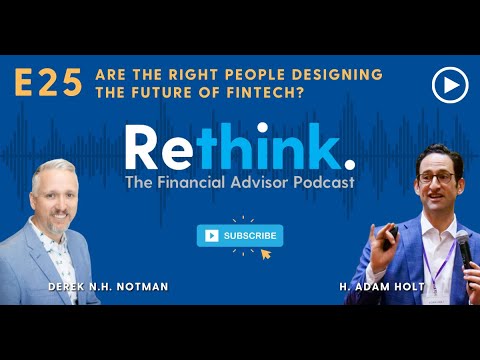
Watch and Listen
Episode Summary
In this hosts-only conversation, Adam and Derek ask whether the wrong people have historically been designing the fintech that advisors use every day. Drawing on their own experience building Asset-Map and Conneqtor to solve problems they personally lived through as advisors, they argue that solutions built by end users' own hands, rather than by enterprises funding a project from the top down, are the ones that actually get adopted. The episode challenges advisors and fintech builders alike to rethink who should be at the table when new tools are designed.
What This Episode Covers
- Whether the wrong people have been designing fintech
- Why adoption, not innovation, is the real measure of success
- Building tools from a personal, lived advisor problem
- Why enterprise-funded CRMs often go unused
- Field-testing solutions with real advisors before scaling
- The case for advisor-built, advisor-first technology
Full Transcript
Full timestamped transcript.
[00:00:00] H. Adam Holt: Welcome to Rethink: The Financial Advisor Podcast. My name is Adam Holt.
[00:00:06] Derek Notman: And this is Derek Notman. We are your hosts, both veteran advisors and fintech CEOs who challenge the status quo, question everything, and have fun doing it. Hear honest commentary on the challenges facing advisors today. And be part of a community where we can all rethink the profession.
Now on to our episode
Adam, do you think the wrong people are designing the future of fintech?
[00:00:36] H. Adam Holt: Hmm. I like that question. Historically, yes. I think the wrong people have been designing what we're currently using. And that's, thankfully, I'm hopeful that the future is being designed by people who have actually had the problem People like you, people like me- Right
and like a lot of our friends out there that are starting to create the next generation of tech. But it's not common. What do you think?
[00:01:05] Derek Notman: It's not common. I, I would agree with you, not that we wanna throw anybody under the bus here, but- Vvv Yeah. Beep,
[00:01:13] H. Adam Holt: beep,
[00:01:13] Derek Notman: beep.
[00:01:14] H. Adam Holt: We're gonna do it.
[00:01:15] Derek Notman: Do it
[00:01:15] H. Adam Holt: again. We should do it.
That was the bus, that was my radio voice bus driving over people.
[00:01:21] Derek Notman: That was amazing. You should- You like that? ... really just go mainstream.
[00:01:24] H. Adam Holt: I was asking you, what do you think that the future of, of fintech is being designed by the right people?
[00:01:29] Derek Notman: I don't, and I think when you look... I'm putting my entrepreneur business owner hat on for a moment.
One of our jobs is to know your customer as, as the best that you possibly can because at the end of the day, if you wanna build a really successful business, that will be a byproduct of solving a problem for your customer. So what's the best way to know your customer? To be your customer.
[00:01:59] H. Adam Holt: Hmm.
[00:02:00] Derek Notman: What do you think?
[00:02:01] H. Adam Holt: That's true. You know, I didn't think about it that way. Probably a lot of the social media tech that's taken over our life was designed by somebody who said, "I have this problem and I'm so passionate about it, I'm gonna fix it. And I know all my friends have this problem because we complain about it." And now investors believe it 'cause they're willing to put money behind it, and guess what?
Everybody saw themselves using the solution and said, "I... This is a f- this solves my personal problem," and, and they've taken over. And, and you can imagine why there's hundreds of millions of people using social media today as an example. Yeah. Or even the newest, you know, cool tech that I keep buying a new app every week it seems, that does something cool or solves a problem I didn't even know I could solve.
But I think with respect to financial services, there has been a real gap in solutions that most financial professionals use having been created by people like them. The problems it seems, the... Most of the solutions we are seeing today are designed by engineers, okay? And I'm saying this lovingly 'cause we employ a bunch.
And people who have the money to pay for a project, like a large enterprise who says, "We need a CRM. Let's fund and spend tens of millions of dollars on a CRM. Let's bring in a bunch of engineers and consultants, and let's build a CRM and we'll roll it out to all the advisors." And then the advisors get it, and what happens, Derek?
[00:03:29] Derek Notman: They don't use it.
[00:03:30] H. Adam Holt: Crickets.
[00:03:31] Derek Notman: Crickets. And then they're like, "Well, why aren't they using this?" '
[00:03:35] H. Adam Holt: Cause they s- 'cause the people who are funding the project are solving their problem.
[00:03:39] Derek Notman: Exactly.
[00:03:39] H. Adam Holt: They're not solving the advisor's problem. The advisors didn't ask for another CRM with workflow and data oversight and management to see, oh, what are our people doing?
They said, "I, I, I wanna take notes on my clients and revert back to them when I see them again, and maybe automate an email to them once in a while, and send a reminder for RMDs, and that's good enough for me." Rolodexes work just fine, by the way. I don't know if you remember Rolodex.
[00:04:06] Derek Notman: Yeah, I had... Do you remember the old tickler card system?
[00:04:09] H. Adam Holt: Oh, yeah.
[00:04:09] Derek Notman: I had that
[00:04:10] H. Adam Holt: one. One card system.
[00:04:11] Derek Notman: Yeah, yeah. Absolutely.
[00:04:12] H. Adam Holt: Did that work? It worked for, like, 800 years, right? It worked. Passed down from generation to generation.
[00:04:16] Derek Notman: Yeah, and then they tried to put that into a CRM without actually asking the advisor, and it didn't work so well anymore.
[00:04:23] H. Adam Holt: There's exceptions to that.
When I think about the most popular CRMs in terms of, uh, who's using what today between Redtail and Wealthbox, they really just dominate because I think they were really designed in mindfulness of the advisor-
[00:04:36] Derek Notman: 100% ...
[00:04:36] H. Adam Holt: journey. And that is interesting because we started racking our heads before coming to this podcast and saying, "Who else in our space is really doing this?"
Right? There's a lot of new tech that's come out, Derek, not only us. This is a, this is probably a good example. So tell us how you as a financial advisor came up with your most recent technology company. How did that happen? Give us the short version.
[00:05:01] Derek Notman: There's two different companies I'm building r- well- Uh-huh
I've only built one. Which one do you want me to talk about?
[00:05:06] H. Adam Holt: Well, how about the one th- how did you first start? Because I know why you did the second one. Tell us the first one, Connector.
[00:05:11] Derek Notman: So Connector. So I was like most advisors, including yourself. I was taught to cold call, door knock, drive, work nights and weekends, have a brick and mortar office, all of that stuff.
So I did, and I bought it hook, line and sinker. Made some okay money. Did all r- But I had no time. I was missing time with my family. I became a dad. I'm like, "Wait a minute here, my priorities are shifting drastically now, and my business is not growing. It's not as scalable as I'd like it to be. I don't wanna have to keep hiring more and more staff.
I bought a 10,000 square foot office building, I don't wanna have to buy more." So long story short, I was like, "I'm tired of this. I'm tired of doing what's always been done. I'm tired of spending a lot. My margins are getting squeezed." I was just, the, the whole thing was getting really tiresome. So I was like, "All right, there's gotta be a better way."
And that's when I went down this whole, like, remote digital path, if you will. Mm. And I'll tell you, most advisors are like, "Derek, you have to wear a suit and tie to be successful in this business. You have to drive two hours one way to meet with someone at their home, if that's, that's what they want. You have to have an expensive office.
You have to have a conference table and a board room and blah, blah, nice artwork and the really fancy coffee maker." No, I don't want that stuff. I agree. So all those advisors are like, 'cause I don't like being told I can't do something. Mm-hmm. So I was like, "All right, there's gotta be a better way." And I rethought, rethinking, right?
Mm. The entire advisor model, and it took a while because there wasn't a blueprint on how to do it. So long story short, I built a practice that was very successful remotely. I've been remote since 2013. Make more, spend less, work from wherever the hell I wanna work. And what happened is a lot of the same advisors that said, "Derek, it can never be done," saw the success I was having, and that I was doing it from Japan or Ireland or South Africa or the beach, wherever the hell I wanted to be, and they're like, "So how are you doing that?
How do you run a blog? How do you run a virtual meeting?" All of these little things. "How do you do financial planning online?" All of this stuff. And I was like, boom, that's the problem I've just solved for myself. It took years to figure out. But I've lived it, I've been through the pain. Now I'm gonna go solve it for the people that are asking about it, and that's how I have created Connector.
Connector was inspired by other advisors asking for help.
[00:07:37] H. Adam Holt: Did you ever expect that Connector was going to be a big thing, or was it just a side way to monetize your unique expertise?
[00:07:48] Derek Notman: At the time, it was a passion project.
[00:07:50] H. Adam Holt: Hmm.
[00:07:51] Derek Notman: My r- advisory business was doing really well and I had extra time. And I had the entrepreneur hat on, like, "I wanna go build this thing and see what happens."
And then it really actually took off, and it was funny, I announced it, like, massively on Michael Kitsis's podcast December of 2019.
[00:08:12] H. Adam Holt: Oh, my.
[00:08:13] Derek Notman: Right?
[00:08:14] H. Adam Holt: Yeah. The
[00:08:14] Derek Notman: beginning. Talk about timing. So COVID wasn't on the radar yet, but that's when it all went live. And it's just been growing ever since, which is r- which is pretty cool, and some really awesome stuff has happened because of it, and even some things recently.
So,
[00:08:28] H. Adam Holt: yeah. Well, that's interesting. I wonder, I... You know, it's funny because it sounds to me, just to recap from at least what I heard in your voice, you had a problem, you solved the problem for yourself, you optimize it over a while, probably before '19 hit.
[00:08:39] Derek Notman: Oh, yeah.
[00:08:39] H. Adam Holt: And then you had inbound demand when oth- other people said, "Hey, I wanna do what you're doing."
So you started creating a bit of a role model, and realized that people were probably willing to pay you for that.
[00:08:51] Derek Notman: Yeah.
[00:08:51] H. Adam Holt: And they probably should pay you for that because you're giving away your special sauce.
[00:08:56] Derek Notman: I'm giving away sauce and a blueprint that took years to figure out. Sure. So what took me five-plus years to iron out-
[00:09:03] H. Adam Holt: Yeah
[00:09:03] Derek Notman: they can do it in three months now. Yeah. I'm guessing that time is worth something, right? And I think to your point earlier, I think a lot of the newer tech coming out today, just like Connector and Asset-Map, has done the same thing. Mm. And w- while we're on the vein, let's flip it back. Tell me what problem were you solving with Asset-Map?
[00:09:23] H. Adam Holt: Similar to you, although irony, the irony behind this is I also went remote for most of my meetings back in the same period of time that you did, mostly because I needed my time back to run Asset-Map, and my clients actually preferred it. Right. And I had a big infrastructure, and I, I actually think that the whole remote movement was happening well before COVID.
The problem is that a lot of firms hadn't bought into it yet or hadn't, didn't even have the capability. And what I also sense in your story is that you were right place, right time. You had a solution to a problem that wasn't perceived to be widespread yet, and then all of a sudden it was, and there was no other players.
And in a sense, because you had the forethought and took the five years to hone the skill that nobody valued until everybody valued it, and now you were actually in a blue ocean situation. And so where do you go to train for moving your firm remote when you have no cho- You go to Connector, right? Now you have thousands of- Connect
advisors you've touched. So, so in a sense, the, the, you hit the Tesla bubble. Which is we all knew it was gonna be a big thing, but it, it, it took a moment of critical mass- I
[00:10:33] Derek Notman: suppose it did ... to,
[00:10:34] H. Adam Holt: to, to take off.
[00:10:35] Derek Notman: It completely did. Well, you and I were talking earlier about my e-book that- Mm-hmm ... Connector has, just to give people context.
I wrote that e-book initially, I believe it was like June, July of 2019 when I first published it. Mm-hmm. And I talked about the 100-year storm that was coming that was gonna disrupt our industry.
[00:10:52] H. Adam Holt: Mm.
[00:10:53] Derek Notman: It happened six months later. I didn't know it was gonna be COVID, but that's what happened, right? Yeah. So I...
It is forethought, and I think just knowing that and h- seeing that problem and then being able to apply that problem and be like, "Wow, as an advisor, if I have this problem, other advisors probably have it." And I'm guessing you saw the same thing-
[00:11:10] H. Adam Holt: Yeah ...
[00:11:10] Derek Notman: with Asset-Map.
[00:11:11] H. Adam Holt: So you did ask that. I didn't answer the question.
Asset-Map started because I was trying to understand these clients, right? So client comes, as you guys all know if you're an advisor, or you've worked with an advisor, that there's a lot of complexity. All consultants go to the most core, basic questions. For an advisor it's, "Tell me who's in your family.
What's going on? What are the things have you done? What's your income sources? What kind of assets do you already have? You have investments, you have insurance. You don't have this, that, you don't. What kind of debt you got? You got a house? Oh, you own your house. What kind of budget you got?" So these are the questions that we have to ask, right?
Some of us did it on a yellow pad. Some of us did it in a fillable PDF. Some of us have a fact finder or something like that. W- so we all have to collect this data to try to get to understand the client before we can give him some recommendation. You've heard that phrase all the time. Prescription without diagnosis is malpractice, and that means we have to understand what's going on in these first.
So I was a visual person. I would draw these maps out that helped me understand what the heck was going on in these families, who was involved. There were trusts, there's businesses, there's real estate, split interests. "Oh, I got this deal with my brother that I'm doing." I go, "Oh my gosh." So how do you do this tabularly?
You can't write a big, huge note- And nobody can read it anywhere at the end. So I used to draw these things and eventually, because I was ADD prone and also artistic prone, I didn't like it to be messy. So I would design these maps. And I went to a meeting once, I remember, 'cause you said this. I drove two hours down to Washington, DC to this client's house.
I was in my early years, so maybe fourth or fifth year in the business I brought my huge Morningstar analysis and my eMoney analysis at the time, 'cause we were real early adopters, and I went there and I had my map on the side, and he saw... I started going through all the big paperwork, all the presentation, and he saw this drawing on the side, and I was scribbling on it, and he literally just took it from me.
He said, "What is this?" And I told him, I said, "This is a map of all the stuff that I've written down that's going on in your life on one page, so I can just reference it and I know what's going on." "You know that big pile of stuff you brought? Take that home with you. I don't want you ever bringing that again.
I want you to make this for me and my spouse, and I'm gonna show it to her when she gets home. I'm gonna explain what the heck we talked about. I know this boxes need to move over here, and we gotta get rid of these things. We gotta add this box, and we gotta push this over here to trust, and now I know what we're doing.
Don't you ever bring that big packet here again. Okay?" It's like consulting to me. And I was like, "Wow, he has the same problem I do," which is he doesn't know what's going on in his life either. Okay? So for me, it started out that way, and where it got scaled, like your story, is by the time I got to 2008, our business was exploding because every client we were doing this map for, and we were uncovering enormous amount of cross-selling business.
So we would not just do the investments, we would get all the investments. Oh, yeah, and we'd get all the insurance. And if there were annuities, we would get in there and fix them, and then we'd get the business because we had everything in front of us. So you can imagine if, if you've ever seen this before, it, when you have permission to talk about everything all the time in every meeting, you don't leave stones unturned.
And we had great sales success, which got recognized. And when I shared this in 2012 with other top producers at my broker-dealer at the time, 20 guys said, "Hey, can we use this process? We'll pay you 1,000 bucks a head. Will you... Can we use it? We're using yellow pads and whiteboards, and we're trying to do this on Excel, but it's in- it's insane.
Takes three hours to do it." So that's what happened. And, you know, you look now at the, the thousands of advisors and multiple currencies and countries using this thing, it shows a prolific problem, which is we all had, which is we need to communicate better, more cl- with clarity and simplicity, and that was the problem we solved.
I don't know that I ever really believed that I would be a tech CEO. I love my business.
[00:14:59] Derek Notman: I didn't set out that way either. I want my LinkedIn profile to say that. Right?
[00:15:03] H. Adam Holt: Yeah. But it has taken us both away from our practices in some measure. It's been distracting or a hobby. Our best practice that became a hobby, that became a business, that actually has now grown more than my financial services practice.
It's taken over my life, my second job, which I love, by the way. I do, I do love it. For those of you that are wondering out there, is it worth it to take your process and turn it into a tech company? We got some takeaways on that one. There's some, there were some, uh, what do we call, um, learning moments.
[00:15:30] Derek Notman: Oh, yeah, for sure.
It's not for everybody.
[00:15:33] H. Adam Holt: It's not.
[00:15:34] Derek Notman: So, so I mean that, it, it's interesting. Okay, we have a common theme.
[00:15:38] H. Adam Holt: Mm-hmm.
[00:15:39] Derek Notman: Advisor had a problem, fixed it, others wanted it, created a company to do it. It seems like all the really cool tech coming out now, for the most part, is either completely advisor created and led, or at least has some very strategic advisor input happening.
[00:15:56] H. Adam Holt: Yeah.
[00:15:57] Derek Notman: Um, so when we say the wrong people are designing fintech, I would say that's ... Like, how do we further define that? Is it basically like you didn't ask? Did you ask the end user, the advisor in the first place?
[00:16:10] H. Adam Holt: Not for us at Map. Just like you, we field tested it for 10 years.
[00:16:14] Derek Notman: Yeah.
[00:16:14] H. Adam Holt: And just kept honing it and honing and cutting and cutting.
Say, "Less is more, less is more." And that's not easy, by the way, for those of you that have actually ever made a presentation. It's not easy to go to one page, especially for something that we're expecting technical expertise to be put into it so it doesn't look like a Fisher-Price Crayola drawing. I mean, that, then all of a sudden it looks like this is simplistic, and that's, that doesn't sound credible.
It's not easy, and I know the same thing is true with you because Connectr, in a sense, one might argue, go remote, it's pretty obvious. You run the Zoom meeting, right? You send a meeting invite. But there are so many nuances, having done it for years, little best practices that are just worth so much extra time wasted- Oh
that make you look so much better if you actually know what you're doing when you present. And so I, I think that people tend to poo-poo it, but it's really powerful when you start using this stuff. But you have to field test it for years to hone it to something that can really compete.
[00:17:11] Derek Notman: You do. You real- you really do.
And you gotta ... Again, I think the, the unique thing that you and I and a lot of other offerings out there have is that we have that insight from being an advisor.
[00:17:21] H. Adam Holt: Yeah.
[00:17:21] Derek Notman: And that's what's really important. A necessity driven problem is clear. We fixed it. And it's still a risk. That doesn't mean that just because you fixed a problem that everyone wants to fix that problem, right?
Yeah. You know? But it, that, that's what happened.
[00:17:36] H. Adam Holt: You know what I think of when I think of what's being built today? So we've seen a lot of all-in-one platforms that are trying to get built out there. You're seeing, not only you're seeing the M&A, the merger and acquisition, around buying a lot of tech that seems like it could be essential tech.
Package it all together, maybe sell it to an advisor, a broker dealer, RAA, as a big package. Try to get economies of scale. Maybe it all talks to each other. Maybe it does, it integrates.
[00:18:00] Derek Notman: Maybe.
[00:18:01] H. Adam Holt: But I, and I'm not so sure, and I really want your feedback on this because I'm not so sure that the all-in-ones are what the advisor community really is, number one, looking for.
'Cause even though they all say they want everything integrated in one dashboard and one single pane of glass, and give me like one spot and I can go get all my tech, every time they get this, it's either way over-designed or it doesn't contemplate five new problems. And so then you gotta go buy the like individual tech anyway, and that doesn't integrate.
And there's a detriment to doing it because now the all-in-ones, they create walls around themselves so that you don't buy tech from outside. So I don't know that it's serving... But what do you think?
[00:18:43] Derek Notman: So I, I have two hats I can wear on this one. So I, I was a broker-dealer advisor for a long time, and I was limited to, "Hey, here's your tech menu.
Take it or leave it. That's it." So I took it and half the stuff I didn't use. I just didn't like it, I didn't like what it did or didn't do. But now as, also as someone who's fully independent with my own RIA, it's actually really fun because I got to build my tech stack from the ground up. And we always tell, like you hear so much about this inter- integration.
It is important, but it's not like the end-all be-all. And I was able to create this tech stack that worked really well for me. So what the point is for advisors listening is, I think if I speak for most advisors, in saying that we like customization. We like to be able to choose because even how you and I run our practices, they are different, Adam.
Like, we have a lot of similarities, but we also like to do things a certain way. So if you're forcing an advisor to do things a certain way, they're just not gonna use most of your tools. Let them pick. Let them build it the way they wanna build it, and yeah, it can actually work pretty darn well.
[00:19:51] H. Adam Holt: But you why, why the broker-dealers don't wanna do that, though.
It's incredibly difficult to manage. The infosec alone, the updates, the terms of use, the oversight that it requires to protect oneself from the inevitable failure of either data breach or someone misused a tool or legal attack, is unfortunately so large that they're tending to trust the li- the bigger names in the space, right?
The names that we all know, that it's easier to hire a consultant from a top four firm and them say, "Oh, go buy X."
[00:20:23] Derek Notman: Yeah.
[00:20:23] H. Adam Holt: And you know what I'm saying? It's a CYA moment. So in, in a sense, you have this kind of pain avoidance by basically going with the big firms that have done it forever and it's slow and expensive, but you don't get fired over it.
But then the field advisors are like, "Why did you buy that? You didn't ask my opinion," or, "I really, I wouldn't have put that there," or, "Can't you just give me what I want?"
[00:20:44] Derek Notman: Right there, my man. That's it. So the big ones are still gonna do this. And I, we under- it's a CYA, as you said. But bring some advisors into the fold.
Yeah. Get some feedback, especially if you're gonna buy an off-the-shelf solution and then customize it for your environment. And, and d- then please don't just bring in your top 20 producers
[00:21:05] H. Adam Holt: The top 20, yeah, always. It- that's what it is, it's always the top 20
[00:21:08] Derek Notman: Always it, like-
[00:21:08] H. Adam Holt: I always got on those committees
[00:21:10] Derek Notman: Yeah, 'cause you're so amazing
[00:21:11] H. Adam Holt: Maybe not.
Maybe I'll, maybe top- Well, there,
[00:21:12] Derek Notman: there were only
[00:21:13] H. Adam Holt: what?
[00:21:14] Derek Notman: Keep passing 20, 21 people in your firm, so a top 20-
[00:21:16] H. Adam Holt: That's right No, there were only 18.
[00:21:19] Derek Notman: Only
[00:21:21] H. Adam Holt: 18. Yeah.
[00:21:22] Derek Notman: But I think get different, more advisors. Put out... Like, you can do a lot of this data gathering pretty quickly with demos and digital surveys, but get more feedback and, "Hey, are you actually gonna use this?"
[00:21:33] H. Adam Holt: Yeah. You know what I just thought? You know what'd be better? A lot of, thinking about, like, both you and... We had our ups and downs with our BDs that either adopted or didn't adopt or fought it or made it difficult. I've been saying for years that some of the larger companies would do a lot of benefit for themselves if they just let their own advisors create best practice tools, and then support that innovation so they can scale it.
Think about how much innovation gets stifled because- Oh ... some advisor in Iowa comes up with this fantastic Excel process. He winds up crushing it, crushing their numbers, and they're like, "What is he doing? Oh, he's doing some Excel. Don't let him do that." "Okay, kill that innovation." And you know what happens?
That advisor's, "Wait, I'm, like, running this killer practice. I'm gonna leave." Exactly. "I'm gonna find a place that's gonna let me do it, and then I'm gonna scale it out," and all that value is lost. Now, I was really lucky. My broker-dealer saw the vision of what we were doing at Asset-Map, and they did. They made me work for it, but they scaled it out, and it's been one, it's one of the most impactful tools in their entire company.
Like- That's huge ... they won, but they had the vision, which a lot don't. And I've seen plenty of situations from big companies that stifle this innovation. They don't create an outlet for it, even, like, a competition or an innovation outlet, and I think that's one of the reasons why you're seeing such a massive growth in RIAs, 'cause frustrated advisors saying, "I've had enough of you telling me how to run the practice, and the clients are going with me, so you're stuck."
So, I, I think it's a wake-up call for the, to get the right people designing the future of fintech.
[00:23:05] Derek Notman: I, I think you hit it on the head right there. I mean- We're not gonna go down into the, the weeds about why I left the place I was at, but I went independent for a couple big reasons, and I think you've just touched upon them.
[00:23:18] H. Adam Holt: Yeah. We wanted to list... I, I m- I appreciate that. So in addition to ourselves, we, we're putting ourselves in this category of, of advisors who were dumb enough to create their own tech that actually- ... had some kind of scale. And we came up with a whole bunch of names. Now, I know we're gonna miss some people here.
And by the way, friends- That's, and that's our purpose ... we, we apologize. Yeah. You're right, we don't have a- we're gonna make it a 50-minute podcast. But here's some of the tech that we found really exa- is a great example of this. Probably the one that comes most at top of mind is clearly eMoney was created, you know, in many parts by Edmund Walters, who was an advisor himself and just was al- oh, is just very vocal about how it was broken, the system.
Didn't do financial planning, vaulting, all that stuff. So you think, that's, that was an actual amazing feat that he was able to pull it off, get the backing, and in, you think about the thousands of users that eMoney can claim today. It's really a great example. What, what comes top to mind for you?
[00:24:10] Derek Notman: A newer one that I'm actually using is Altruist.
Jason Wink was, he was actually an early adopter of being an RIA.
[00:24:18] H. Adam Holt: Yeah.
[00:24:18] Derek Notman: And he's still an active advisor today, I believe. Again, another great tool advisor created to solve problems that he saw.
[00:24:26] H. Adam Holt: And notice both of them didn't solve, uh, originally, before they allow other com- people to take over their company.
When Edmund sold, I think that changed a bit. But, but they stayed true to form. They didn't try to overbuild, okay? And that's what we see large companies tend to do. They try to solve every single problem. And instead of solve this advisor problem so well that nobody can question it, they are just the best in the business.
There's a couple others that came to our mind. Roger Pine and Kevin Loeser created Holistic Plan for themselves. Holistic Plan is blowing up. And if you think about the corollary, at the same time, Andrew Outfest from Outfest RIA did FPalfa. So similar concepts of how we help advisors add more value by solving the real problem the advisors had, which is I don't wanna read these tax returns and I wanna know what they say.
So just scan them and let the system tell you what it says. Yeah. Right? Scan the trusts, let the system tell you what it says. Saves us an enormous amount of time. Why nobody solved this before just blows my mind. So they've done awesome jobs there. What are some other ones that we like?
[00:25:31] Derek Notman: Oh man, there's a long list.
[00:25:33] H. Adam Holt: I mean- What about Kitsis? Kitsis did a bunch.
[00:25:35] Derek Notman: Yeah, he's got... Obviously, he's got his really awesome personal branding and blog and podcast and all that, but he- he's got XY he was involved with, Bean Counters.
[00:25:45] H. Adam Holt: FP Pathfinder with Michael Fors. Path-
[00:25:48] Derek Notman: Right. So all cool stuff. And, and Kitsis even says himself, he started off selling life insurance.
He was in it, and he's still a registered, you know, as an advisor today.
[00:25:57] H. Adam Holt: Oh, perfect example, because he, he talks a lot about fee-based. About... So he did, uh, AdvicePay with, uh, Alan Moore.
[00:26:02] Derek Notman: Yeah, fair.
[00:26:02] H. Adam Holt: From XYPN.
[00:26:03] Derek Notman: Yeah. Yeah.
[00:26:05] H. Adam Holt: So that's... We know that's growing in size, because I'm starting to see them everywhere. How about on the compliance side?
Pulse 360 with, uh, Anand Sheth. He's solving problems- Anand Sheth ... that he could see on the back office side.
[00:26:16] Derek Notman: Doesn't he have a CFP?
[00:26:18] H. Adam Holt: He might be a CFP.
[00:26:20] Derek Notman: I can't remember, but he's totally in the space. I remember talking to him about how, you know, his days as an advisor.
[00:26:25] H. Adam Holt: Oh, speak about CFPs, Ross Riskin, Visi- Yeah.
That's relatively new, right? Explaining problems with pictures. Well, I like that one, clearly.
[00:26:32] Derek Notman: Yeah, that's right up your alley.
[00:26:33] H. Adam Holt: Pictures. Most of the college funding solutions and Social Security analyzer tools were also created by financial advisors, too, 'cause they wanted to solve that problem for themselves, and nobody was solving it.
There's a couple others. Don Whalen is probably one of the original. PreciseFP with, uh, with Sebastian.
[00:26:50] Derek Notman: Yeah, right.
[00:26:51] H. Adam Holt: Right, right.
[00:26:51] Derek Notman: Um,
[00:26:52] H. Adam Holt: and those guys solved that problem way before it was cool to try to move data and do great fact-finding really early on. They just got picked up by Docupace, actually. So there's so many of you, and, and for our friends that, they're like, "Hey, how come you didn't mention us?"
It's just because it's top of mind, and we're gonna run out of time. But the point
[00:27:12] Derek Notman: is that- Post it when we post it.
[00:27:13] H. Adam Holt: There you go.
[00:27:13] Derek Notman: Drop your company in the link-
[00:27:15] H. Adam Holt: That's right ...
[00:27:16] Derek Notman: uh, in the post. We're happy to push it out for you.
[00:27:19] H. Adam Holt: There's lots of others, and we think that the future of fintech is really gonna be designed by people in the space.
The barrier to entry to create a company, as we all know, is much different, like, than it was, what, five years ago.
[00:27:30] Derek Notman: Yeah.
[00:27:30] H. Adam Holt: We can all start a tech company today. There's lots to do, lots to work in that process, but don't shy away from it. So let's talk about, let's talk about the takeaways, because we wanna make sure that, uh, for those of you that are thinking along these lines, what can I take away from today, Derek?
[00:27:43] Derek Notman: There's a lot here. I know we've jumped around a little bit, but I think at the end of the day, this is a top of mind topic 'cause a lot of advisors are thinking about tech and how can they be better at what they do and serve their clients. Speaking as an advisor now, I would say one of the first things you really gotta think about is vet your tech, and I don't mean just do a demo and talk to a sales rep.
Really talk to them.
[00:28:06] H. Adam Holt: Who
[00:28:07] Derek Notman: built that tech? Do they understand what it means to be an advisor? If it's a digital marketing firm, have they actually lived that life trying to do digital marketing as an advisor, or do they just sell to advisors? There is a huge difference. And what I have found, and I think there's a lot of providers out there, and you would agree, Adam, is that the tech that tends to be built by advisors tends to run a little bit better for- or advisors.
[00:28:32] Announcer: Hmm. I
[00:28:33] Derek Notman: mean, just 'cause we know it. It's just the space. Not that other tech is bad, but I think personally if I have a choice and I look at the founder page on the website and I say, "Oh, wow, there's some advisors here that are involved with this company," that makes me feel really good 'cause I know that they get me as somebody that, that might be using their tool.
[00:28:51] H. Adam Holt: Hmm.
[00:28:51] Derek Notman: I think if you're gonna put on your fintech CEO hat, Adam and I didn't put that on On first, right? This was something that happened. We've ended up putting the hat on as we went on. But if you have an idea, if you were solving a problem as an advisor right now and you think it's scalable, don't just think it, find out.
As Adam and I both said, we tested it. We put it out in the market. We got client feedback. We got advisor feedback. So you may have an amazing idea, but going from idea to execution and having to scale a fintech company is a long, bumpy road, so just be careful there. But at the same time, I really encourage those that have ideas to, to take a hard look at it because you guys are the future of our industry.
I think the best tech for our industry is gonna be created by other advisors like you. And also, it's okay to just be an advisor. I think Adam and I had this, like, little itch where we had to go and we're gonna do this, and next thing we knew, we woke up and we had another company. Yeah. An expensive hobby.
[00:29:48] H. Adam Holt: That's right.
[00:29:49] Derek Notman: You know?
[00:29:49] H. Adam Holt: Deductible hobby.
[00:29:50] Derek Notman: A deductible hobby. So it's okay to be just an awesome advisor and get your business to a point where you don't have to work full time. That's so awesome if you wanna do that. And if you have an idea, maybe share it with someone else who's willing to build it. You know, build it.
Mm-hmm. That's, that's it. So that, that would be my takeaways.
[00:30:04] H. Adam Holt: Very cool. It's funny, I thought the same thing. I wrote down that to look at the founders and see if they solve the pain point that you actually have right now. And many of these advisors, like I know we were and still are today, accessible. So talk to us about the problems that we're trying to solve.
What are the visions? And we're also thinking about what's the problems five years from now, by the way. We're, we're still thinking about what problems are we gonna have, put our advisor hat on, go talk to our team, "What are your, what's the real problems?" 'Cause we don't, we're not stopping with what the problem was a year ago.
We're starting, we're doing that stuff. If you're doing, if you're really thinking about doing a technology, uh, platform, make sure you have a very clear vision and the people that it's gonna take to execute it, 'cause you're likely not the skilled person for all of it. You may not have tech skill or operation skill or marketing.
Think about funding and backing and, of course, that you have the support of your family because you're talking about making a major change to your life, as we had to. I probably had a 50% reduction in income just because I, I wasn't focusing on acquisition and retention business. So I was okay with that 'cause it was passion project for me, and I saw a long-term vision there.
But make sure you're really thinking it out, not just, "Oh, I got a cool idea," and you're always worried you're gonna see it on the shelf the next day, and so you just, you rush into it, but you don't really think it through. We've seen a lot of those ideas fail. And I, around that, I've seen a lot of advisors come to me and say, "Adam, I have this idea.
I wanna run with it." And I'm like, "Okay, what's the idea?" They're like, "No, I don't wanna tell you 'cause you might steal my idea." I'm like, "Well, I'm not gonna give you any advice either." It's like your client saying, "I'm not gonna tell you anything." "Should I invest in Apple or Tesla?" Yeah. "Uh, I'm not gonna tell you."
Or going to the
[00:31:32] Derek Notman: doctor. "Hey, Doctor, guess what's wrong with me and give me-" Yeah ... a prescription," right? "I'm not gonna tell you what's wrong." "
[00:31:37] H. Adam Holt: My toe hurts. Can you, you have any oxy?" "No. Okay." So-
[00:31:41] Derek Notman: What kind
[00:31:41] H. Adam Holt: of doctor do
[00:31:42] Derek Notman: you see?
[00:31:43] H. Adam Holt: Well, no, I'm joking, of course. I don't see doctors. But don't hoard your ideas. I, I know everybody's worried that someone's gonna steal their idea.
Don't worry. Everybody who's busy is too busy to worry about stealing your idea, okay? They got a roadmap for six months, a year in advance. They're too busy to try to knock off your idea. And by the way, if it's that good and they love it, maybe you should just license it to them. If they have the infrastructure to execute something-
[00:32:03] Derek Notman: Yep
[00:32:03] H. Adam Holt: don't get hung up. Bu- building something from scratch to actual fruition ain't no easy, okay?
[00:32:09] Derek Notman: Oh my gosh.
[00:32:10] H. Adam Holt: And, and it takes an enormous amount of time, capital, and energy, and likely still is not gonna work out. So if you have got a great idea and you've got a good partner you trust, maybe it's better to just take a piece of it and say, "Hey, let me champion this and be your advisor."
So I think there's great ways to create innovation That we really could look at and, and... But don't be afraid of it, 'cause the next generation will be created by you in the field to solve the problems that are human, not just tech-driven. Think that's gonna be really important.
[00:32:37] Derek Notman: Great advice. I hope that resonates with everybody.
And h- hit us up. Adam and I like to help out and give back. Drop a comment, send us an email, whatever.
[00:32:45] H. Adam Holt: Mm-hmm.
[00:32:45] Derek Notman: Let's wrap this up with a c- a question that came in. Adam, something that might be top of mind for advisors, and just see where this goes. It's, there's this talk about, back in the old day it was your brick and mortar office, buying nice artwork- Hmm
nice tables, plush carpet, swag, all of that stuff. Should advisors be doing that? 'Cause arguably, clients didn't really care about most of that. They cared more about specifically thoughtful things that were being done for them by you. So should, in this digital world we live in, should advisors be spending a ton of money on a, on a, like a 20 grand on a website or whatever else type of swag that they can do, and these digital pamphlets and all that, should they be spending a ton of money on that, or should they be more thoughtful about where they're spending their money?
I
[00:33:34] H. Adam Holt: mean, any business, right, we should always be thoughtful about where our money's going. There's that great phrase that says, uh, "Don't tell me what you care about, show me your budget. I'll, I'll tell you what you care about." And, and I think if we're putting our money into a website or spending 20,000 on a website, it better be pretty awesome, and we better drive everybody to that website, and we better...
We should use it. If you have a Ferrari, it should be your daily driver, okay? The problem is advisors just don't know what, what these things should cost and what they should spend money on. Unfortunately, like any uninformed consumer, they basically get pitched, "Oh, you need to spend 25 grand on your website," and that's true, you can.
I've done that before, by the way. I've done it three or four times, 'cause I just- Crazy ... I thought, I kept thinking to myself, "It's gonna be that much better. It's gonna drive traffic. It's gonna..." No. No. No, it doesn't. It doesn't. It was just pretty. And- Yeah ... and it was like that artwork on the, in the conference room nobody saw because we were doing virtual meetings.
So- ... nice artwork.
[00:34:28] Derek Notman: Yeah.
[00:34:28] H. Adam Holt: Okay. That's what I think. I, I think we're just spending money on the wrong things. And what i- what would happen if we spent that same X number of dollars on giving customers the real thoughtfulness of what would help them achieve their goals? Like, maybe what they really need is to be organized, so what I did is I spent five person hours and I had somebody organize your entire whatever.
Here. That seems to me really thoughtful, and I think we're getting to the place where we're, we're ta- everyone's talking about mass personalization. The personalization is the real key, okay? For sure, yeah. Everyone's just trying to scale and make it easy it is. I just didn't think of you, but it looks like I did.
So maybe we should spend our money on really being thoughtful in ways a client can never leave us, 'cause we're just so on top of their needs.
[00:35:20] Derek Notman: My guess is that clients didn't leave or not leave your firm, Adam, because of the nice artwork. They didn't leave- Mm ... because of the thoughtfulness of the stuff that you did, the relevance of it, the personalization of it.
I think that's... Unless your artwork was of, like, your client.
[00:35:37] H. Adam Holt: You don't think it was the pens? We had those awesome pens- Oh, the pens ... with logos.
[00:35:41] Derek Notman: Or the, the, the fridge magnets.
[00:35:43] H. Adam Holt: Oh, the magnets. That's true. The squishy balls with your logo on it.
[00:35:47] Derek Notman: Oh, my gosh.
[00:35:48] H. Adam Holt: The dog eats it apart. Somehow the dog never sent referrals based upon that squishy ball.
[00:35:52] Derek Notman: Yeah, never.
[00:35:53] H. Adam Holt: Never. I never got a referral from the dog.
[00:35:55] Derek Notman: So don't make the same mistakes that you did as a brick-and-mortar advisor virtually, I think is what I'm... Or digitally, is I think- Yeah ... like we're saying here. Be thoughtful, be smart. And by the way, you mentioned earlier, like most advisors don't know what it costs.
I actually break that down in Connector. Here's exactly what it costs to build my- Right ... my practice. It's
[00:36:14] H. Adam Holt: g- it's good
[00:36:15] Derek Notman: stuff
[00:36:15] H. Adam Holt: Well, we gotta wrap out. This is awesome. We gotta wrap
[00:36:16] Derek Notman: it up.
[00:36:17] H. Adam Holt: Okay. First of all, hopefully you've taken something from this presentation. You're thinking, "Yeah, I, I was thinking about starting a tech," or, "I know somebody else who was."
Forward this podcast to them and have them listen to it. Help force them to ask some of the good questions, the hard questions. And of course, subscribe to this podcast, tell your friends, listen to it a second time, take something from it, and of course, contribute back to us by posting on Rethink on our s- LinkedIn page.
[00:36:41] Derek Notman: Leave us a review. We've got some pretty awesome reviews from folks. Leave us a review if you don't mind. We'd really appreciate, we really appreciate you guys spending a little bit of time with us, and hopefully having a few laughs, whether it's with us or at us. I don't care, whatever, I'll take it. It's all fine.
It's all fun. But yeah, we really appreciate it, folks. Thanks again, and we'll be circling back with all of you soon here.
[00:37:02] H. Adam Holt: Thank you, Derek. As always, good to see you, my man. And till the next time. Till the next time.
[00:37:07] Announcer: Thank you for listening to Rethink, the Financial Advisor podcast with Holt and Knottman. Be sure to subscribe now and join the ongoing conversation.
The information covered and posted represents the views and opinions of the guest, and does not necessarily represent the views or opinions of Asset-Map or Connector.
The content has been made available to you by Asset-Map for informational and educational purposes only.